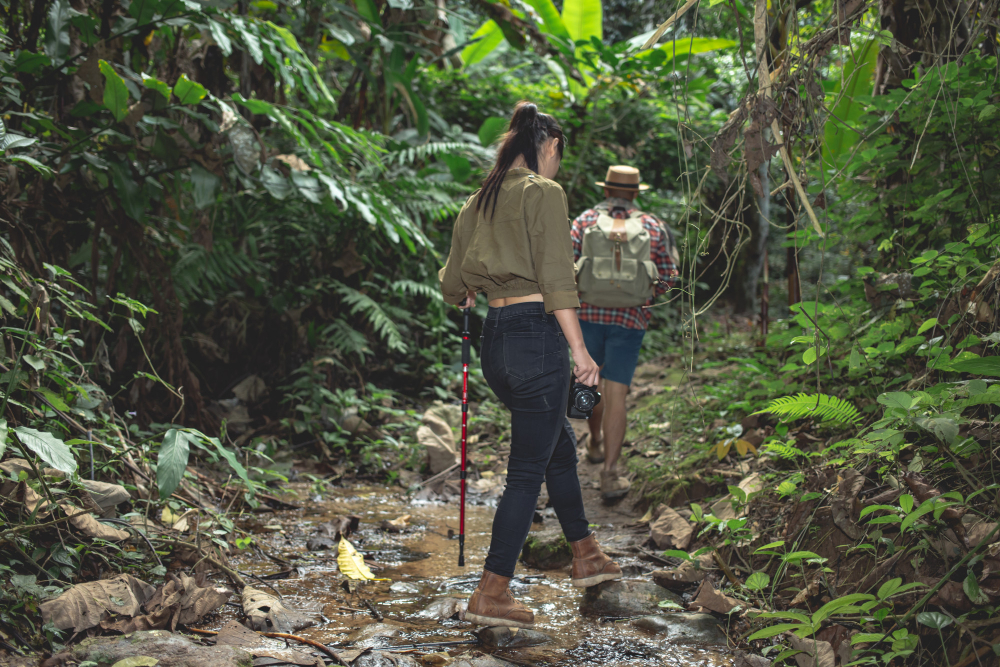
What is citizen science in Costa Rica?
Citizen science Costa Rica refers to projects and activities where members of the public participate in collecting, observing, recording, or contributing information that can support scientific research and conservation.
You do not necessarily need to be a scientist.
A traveler might contribute by recording a bird observation, documenting a plant, participating in a wildlife count, helping monitor a habitat, or joining a structured conservation activity led by researchers or local organizations.
Costa Rica is particularly well suited to this type of travel because its biodiversity attracts researchers, naturalists, conservationists, and nature-focused visitors from around the world.
Academic research has documented citizen participation in bird counts in Costa Rica, while recent conservation initiatives have expanded participatory monitoring into marine and other ecological environments.
Why is citizen science becoming relevant to travel?
Traditional tourism often asks visitors to observe nature.
Citizen science adds another dimension: participation.
Instead of simply taking a photograph of a bird, travelers can learn how observations are recorded.
Instead of walking through a forest without context, they can learn how researchers monitor species.
Instead of seeing the ocean only as a place for recreation, they can understand how marine ecosystems are studied.
This changes the role of the traveler from spectator to participant.
That does not mean every vacation needs to become a scientific expedition.
Even a simple observation can encourage people to pay closer attention to the environment around them.
Why is Costa Rica a natural destination for citizen science?
Costa Rica’s biodiversity and conservation infrastructure create many opportunities for nature-based research and monitoring.
Research published on Costa Rican biodiversity has shown that biodiversity itself contributes to tourism demand, particularly when natural areas are accessible to visitors.
That creates an important connection between tourism and conservation.
Healthy ecosystems attract travelers.
Travelers generate economic activity.
And well-designed tourism experiences can help create awareness and support for conservation.
Citizen science adds another potential connection by allowing visitors to contribute information and develop a deeper understanding of the ecosystems they are visiting.
Can tourists participate in scientific research in Costa Rica?
Yes, depending on the project.
Participation can range from simple observation and data submission to structured field activities supervised by researchers or conservation organizations.
The level of involvement varies significantly.
Some projects may ask visitors to identify birds or record sightings. Others may involve marine monitoring, wildlife surveys, camera-trap analysis, habitat observation, or other specialized activities.
A good citizen-science experience should clearly explain what participants are expected to do, how information is collected, and how the data will be used.
Birdwatching is one of the easiest ways to start
Birdwatching is particularly accessible because birds can be observed without physically interacting with wildlife.
Costa Rica has a long history of community participation in bird monitoring.
Research documenting bird citizen science in the country describes community-led bird counts and participation by Costa Rican naturalists. These records can contribute to conservation research concerning changes in bird populations and communities.
For travelers, the concept is simple.
Wake up early, bring binoculars or a camera, walk quietly, observe birds, identify them if possible, and record what you see using an appropriate platform or project.
The experience can be both relaxing and educational.
How does eBird support citizen science?
Platforms such as eBird allow birdwatchers to record observations and contribute those records to a much larger biodiversity database.
This creates an interesting opportunity for travelers.
A bird sighting during a Caribbean vacation does not have to remain only a personal photograph.
If submitted appropriately through a recognized platform, an observation can become part of a broader record of species distribution and abundance.
Costa Rican birding projects have used eBird to document local bird diversity and make observations available to researchers, educators, land managers, and conservation professionals.
For travelers, the important lesson is that careful observation can have value beyond the vacation itself.
What can you record besides birds?
Citizen science is not limited to birds.
Depending on the project, participants may contribute observations involving:
Plants
Butterflies
Moths
Amphibians
Reptiles
Mammals
Marine species
Fish
Insects
Seasonal ecological changes
Some citizen-science programs combine multiple types of monitoring.
For example, ecological projects in Costa Rica have involved participants in biodiversity observation, camera-trap analysis, plant phenology, primate monitoring, and other forms of data collection.
The exact opportunities available to travelers depend on the organization and location.
Can citizen science help protect Costa Rica’s Caribbean coast?
Participatory monitoring can help researchers and communities understand changes in ecosystems.
A recent 2026 study from Costa Rica’s North Pacific provides an example of marine citizen science being used to collect information relevant to fisheries and conservation. Researchers described participatory monitoring involving recreational fishers and recorded hundreds of individual fish across dozens of species.
While that example is from the Pacific rather than the Caribbean, it demonstrates the broader potential of citizen participation in ecological monitoring.
On the Caribbean coast, travelers can apply the same philosophy through responsible wildlife observation, bird recording, conservation activities, and support for organizations working in the region.
Citizen science and the Caribbean rainforest
The Caribbean coast is particularly interesting for travelers because several ecosystems exist close together.
You can move between beaches, coastal vegetation, rainforest, rivers, wetlands, and protected areas within a relatively short geographical area.
That creates many possibilities for observing biodiversity.
A morning birding walk can produce a completely different set of observations from an afternoon near the coast.
A rainy day may reveal amphibians and insects that are harder to notice under different conditions.
The important part is learning to observe rather than simply consume the landscape.
What does responsible citizen science look like?
Citizen science should never come at the expense of wildlife.
Participants should follow the instructions of the project organizers and protected areas.
That includes keeping appropriate distances from animals, avoiding feeding wildlife, staying on designated trails, avoiding unauthorized handling of animals, and respecting restrictions around nests, dens, breeding areas, and other sensitive habitats.
More data is not automatically better if collecting it disturbs the species being studied.
The best citizen-science experiences combine curiosity with restraint.
Should travelers photograph wildlife for citizen science?
Photography can be useful, but it should never become more important than the animal.
A photograph may help identify a species or verify an observation, especially when submitted through an appropriate biodiversity platform.
However, travelers should avoid chasing animals, using flash when it could disturb them, blocking their movement, or repeatedly approaching them for a better photograph.
The ideal observation is one where the animal continues behaving naturally.
Citizen science can change the way you travel
One of the most interesting benefits of citizen science is that it changes attention.
A normal walk through the forest might involve looking for a beautiful view.
A citizen-science walk encourages you to notice smaller details.
What birds are calling?
Which plants are flowering?
What insects are active?
Are there signs of mammals nearby?
Which species appear repeatedly?
Has something changed since the last observation?
This type of attention can make a short nature walk feel much more meaningful.
How can families participate in citizen science?
Citizen science can also be a useful way for families to make nature more interactive.
Children can learn to identify birds, plants, insects, or animal tracks.
Instead of simply asking, “What animal is that?”, parents can ask:
“How could we record what we just saw?”
That simple question introduces children to observation, evidence, documentation, and scientific thinking.
It also turns a vacation into a learning experience without requiring a classroom.
Citizen science for couples and slow travelers
Couples can approach citizen science as a shared exploration.
An early-morning birding walk, for example, combines movement, quiet observation, photography, and learning.
One person can photograph while the other records observations.
Later, they can compare what they saw and learn more about the species.
This is especially appropriate for travelers interested in slow tourism because the experience rewards patience.
You do not need to find ten species in an hour.
Sometimes the most memorable moment is observing one animal behaving naturally.
Citizen science and regenerative travel
Citizen science also fits naturally with the growing concept of regenerative travel.
Regenerative tourism asks travelers to consider how their presence can contribute positively to destinations rather than focusing only on minimizing negative impacts.
Citizen science offers one possible pathway because it encourages travelers to become more connected with the ecosystems they visit.
The goal is not to claim that every observation directly “saves” an ecosystem.
Instead, participation can contribute to knowledge, awareness, and a stronger relationship between people and nature.
That relationship can influence how travelers behave during their trip and what conservation efforts they choose to support afterward.
How can visitors participate near Punta Uva?
Travelers staying around Punta Uva can begin with simple nature observation.
The surrounding Caribbean environment provides opportunities for birdwatching, wildlife observation, plant identification, photography, and exploration of nearby natural areas.
The most responsible approach is to ask local guides or conservation organizations about current projects rather than assuming that an activity is available year-round.
A knowledgeable local guide can also make the experience significantly more meaningful.
They can explain which species are common, which behaviors should not be disturbed, and how local ecosystems are connected.
Why local guides matter in citizen science
Scientific knowledge is not the only knowledge that matters.
Local guides often have extensive experience observing seasonal patterns, animal behavior, weather, plants, and changes in the landscape.
Citizen science can become stronger when formal scientific methods and local knowledge work together.
Research into bird citizen science in Costa Rica has highlighted how local naturalists participate in producing biodiversity records.
For travelers, hiring local guides can therefore provide more than a better wildlife experience.
It can create a direct connection with people who understand the destination.
What technology can travelers use?
Technology can make biodiversity observation easier.
Depending on the project, travelers may use:
Bird identification applications
Biodiversity observation platforms
Camera-trap projects
Digital species guides
GPS-enabled photographs
Online wildlife databases
But technology should remain a tool rather than the focus.
A phone can help identify a bird, but it should not prevent you from actually watching the bird.
The best approach is to observe first and use technology afterward to confirm what you saw.
A simple citizen-science day in Punta Uva
Imagine starting your day early, before the Caribbean heat becomes stronger.
Walk quietly through a natural area and listen for bird calls.
Photograph species only when doing so does not disturb them.
Record the observations you can identify confidently.
Later, enjoy breakfast and learn more about the species you encountered.
In the afternoon, explore the coast and pay attention to marine life, plants, insects, and other organisms.
At the end of the day, review your photographs and observations.
What started as a vacation walk has become a small biodiversity record.
That is the appeal of citizen science.
How can hotels support citizen science?
Hotels can play a valuable role by helping guests connect with local conservation initiatives.
Accommodation providers can recommend responsible guides, explain local wildlife rules, provide information about nearby protected areas, and encourage guests to observe nature respectfully.
For a hotel surrounded by tropical landscapes, even simple initiatives such as bird lists, nature walks, educational materials, or information about local biodiversity can make a difference in how guests experience the destination.
At Exótico Beach Hotel, the natural setting around Punta Uva creates an opportunity for guests to make nature part of their stay rather than simply the background to it.
Guests can also choose the accommodation style that best fits their trip, from the Standard Suite and Junior Suite to the Exótico Pool Villa.
Citizen science is not about becoming a scientist
Perhaps the most important thing to understand is that you do not need a scientific degree to participate.
Citizen science starts with curiosity.
You observe.
You document.
You learn.
You follow established methods when a project provides them.
And you respect the environment throughout the process.
Even when a single observation seems small, it can become part of a much larger dataset when collected consistently by many people.
Why citizen science could become part of the future of nature travel
Travel is increasingly moving beyond passive sightseeing.
Visitors want experiences that feel meaningful, educational, personal, and connected to the places they visit.
Citizen science fits naturally into that evolution.
It gives travelers something to contribute rather than simply something to consume.
Costa Rica’s existing biodiversity, conservation programs, research institutions, protected areas, and nature-based tourism infrastructure create an environment where this form of travel can continue to develop.
Recent examples of participatory monitoring in Costa Rica demonstrate that citizen involvement can contribute to biodiversity and resource monitoring when projects are properly designed and managed.
The future of citizen science Costa Rica
The future of citizen science Costa Rica is not necessarily about turning every traveler into a researcher.
It is about creating more opportunities for people to understand the ecosystems they are visiting and, where appropriate, contribute useful observations.
For the Caribbean coast, this could mean more travelers participating in bird monitoring, biodiversity documentation, marine observation, conservation education, and community-led ecological initiatives.
The most valuable outcome may be a change in perspective.
After learning how a rainforest is monitored or how a bird observation becomes scientific data, travelers may never look at the landscape in quite the same way again.
Frequently Asked Questions (FAQ)
-
1. What is citizen science in Costa Rica?
Citizen science involves members of the public participating in scientific observation, data collection, monitoring, or research. In Costa Rica, examples include bird counts, biodiversity recording, wildlife monitoring, and participatory ecological projects.
-
2. Can tourists participate in citizen science in Costa Rica?
Yes. Some projects are specifically designed to involve visitors, while others require training or registration. Travelers should contact the organization responsible for a project and follow its participation requirements.
-
3. Do I need scientific experience to participate?
Not always. Many citizen-science activities are designed for members of the public, although specialized projects may require training. Birdwatching and responsible biodiversity observation are among the easiest ways for beginners to start.
-
4. How can travelers help biodiversity without joining a formal project?
Travelers can observe wildlife responsibly, record appropriate sightings through recognized platforms, hire local guides, respect protected areas, avoid disturbing animals, and support conservation-oriented local organizations and businesses.